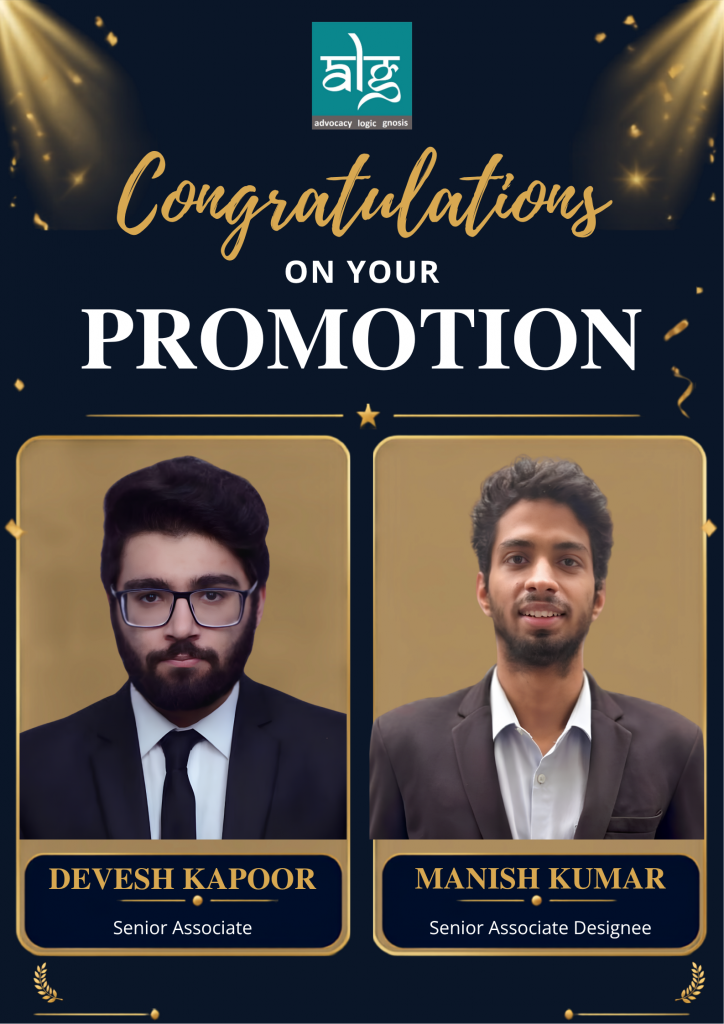
ALG is pleased to announce the following promotions:
✨ Devesh Kapoor – Promoted to Senior Associate ✨ Manish Kumar – Promoted to Senior Associate Designee
Please join us in congratulating Devesh and Manish on this well-deserved achievement and we look forward to seeing them continue to excel, embrace new responsibilities and achieve bigger milestones in their expanded roles.
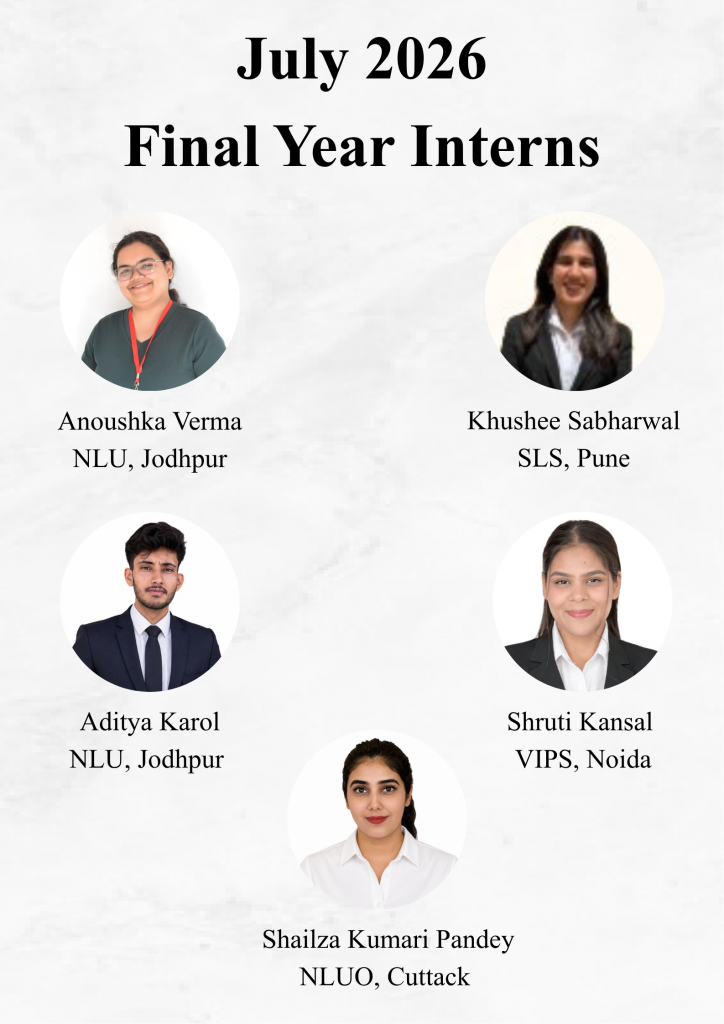
We Welcome Anoushka Verma, Khushee Sabharwal, Shailza Kumari Pandey, Shruti Kansal & Aditya Karol – Who are interning with us for the month of July 2026.
We hope this internship offers them meaningful exposure to IP practice; and also enriches ALG with new ideas and interesting perspectives.
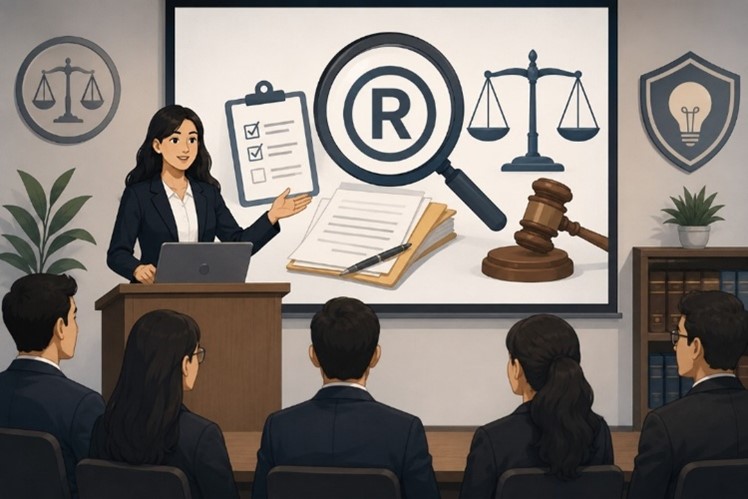
A Legal Issues Seminar – General IP (LIS-GIP) was conducted by Shivanshi Gupta, Associate, on the issue: “Whether the backend use of a registered trademark as a search engine keyword constitutes advertising of the Trademark?” The seminar examined the provisions under Sections 29 and 30 of the Trade Marks Act, 1999, governing infringement by use in advertising and the limits of permissible use, read alongside Section 79 of the Information Technology Act, 2000, governing intermediary liability. The seminar explored the interpretational issue that arises when a trademark is used invisibly, at the backend, as a keyword to trigger search advertisements, despite never appearing before the consumer.
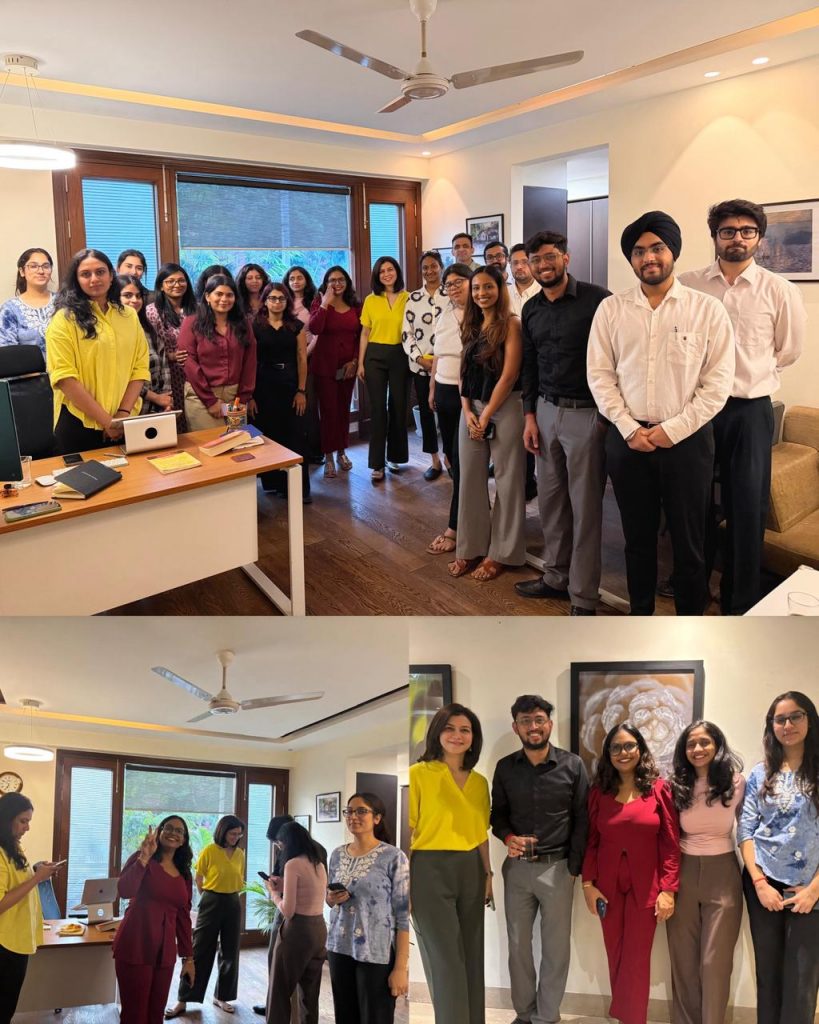
This Pride Month, ALG’s attorneys came together to celebrate the values of inclusion, authenticity, and belonging reminding ourselves that diversity is not merely acknowledged but embraced.
Through meaningful conversations and shared experiences, we reflected on the importance of creating workplaces where everyone feels respected, heard, and empowered to bring their whole selves to work. The celebration also served as an opportunity to recognize that allyship is s built through everyday actions, empathy, and a continued commitment to fostering an inclusive environment.
It was wonderful to see colleagues come together in the spirit of openness, support, and celebration. These moments reinforce our belief that an inclusive workplace is strengthened by understanding, mutual respect, and the unique perspectives each individual brings.
During the last PWS session, Meghana Killampalli, Associate, hosted a discussion on “Should social media platforms share responsibility for preventing commercial misuse of copyrighted content?” The session examined whether social media platforms can genuinely claim the status of neutral intermediaries when they actively promote content featuring trending music, benefit from increased user engagement, and integrate copyrighted works directly into their content-creation tools. The discussion examined the “illusion of accessibility” where the availability of copyrighted music may lead businesses to assume that its commercial use is permitted without obtaining separate licences. The Attorneys further considered whether platforms are better positioned than individual users to detect and prevent commercial misuse of copyrighted content, or whether responsibility should continue to rest solely with businesses that derive commercial benefit from such use. The session concluded with a discussion on balancing intermediary protection, copyright enforcement, and the practical realities of the digital creator economy.
The contents of this website are meant solely for the purposes of
information and updates, and not for the purposes of advertising or
soliciting. ALG India Law Offices LLP is not responsible for decision(s)
taken by anyone on the basis of information/updates provided in
the website.
By clicking "ENTER" below, you acknowledge that the information/
updates provided on the website does not amount to advertising
or solicitation.