Practice Work Shop (PWS) On “Should Personality Rights Extend Beyond Commercial Misuse Include Non-Commercial Uses Of Public Figures’ Identity?”

During the last PWS session, Bhavya, Associate, hosted a discussion on “Should personality rights extend beyond commercial misuse include non-commercial uses of public figures’ identity?”. The session explored the expanding scope of personality rights claims in the digital age, largely arising from unauthorized commercial use such as fake endorsements, AI-generated impersonation, and misleading digital content.

The discussion highlighted that while courts have been justified in granting protection in cases involving clear commercial gain or reputational harm, concerns arise where broad takedown orders and injunctions are issued without clearly distinguishing such misuse from legitimate forms of expression. Such measures may go too far by encroaching upon legitimate forms of expression such as artistic content, parody, and satire. The session concluded that while enforcement remains essential in cases of commercial exploitation, a more calibrated approach may be required to ensure that protection against misuse does not extend into undue control over public discourse.

Legal Issues Seminar-General IP (LIS-GIP) On “Can A Court Extend Injunctions To New Parties After Passing A Final Decree Under The Code Of Civil Procedure, 1908?”

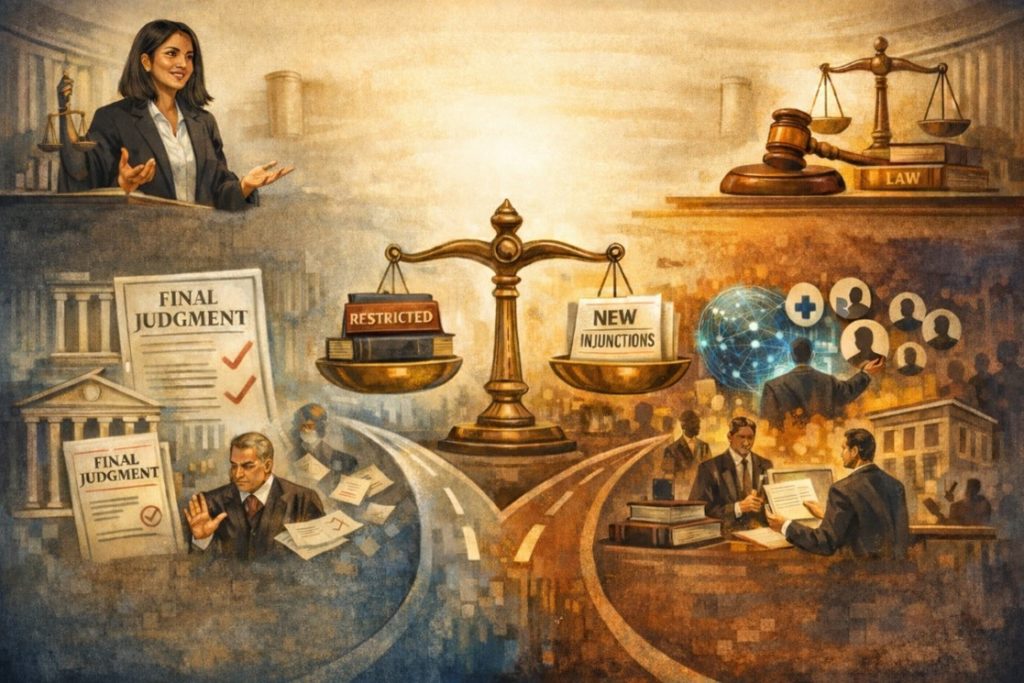
A Legal Issues Seminar – General IP (LIS-GIP) was conducted by Shivanshi Gupta, Associate, on the issue: “Can a court extend injunctions to new parties after passing a final decree under the Code of Civil Procedure, 1908?” The seminar examined the procedural framework under Section 151 and 152 of the Code of Civil Procedure, 1908 governing the correction of clerical errors and the exercise of inherent powers of the court. The discussion further explored whether courts retain the power to extend or modify relief after the pronouncement of a final judgment and decree, despite having become functus officio. While some decisions emphasize strict adherence to the doctrine of functus officio and the limited scope of Sections 151 and 152 CPC, restricting post-decree intervention only to review or correction of clerical errors, others have taken the view that courts may, in exercise of its inherent powers, permit impleadment of additional parties and extension of injunctions to effectively address continuing infringement.

The Presentation can be accessed here.

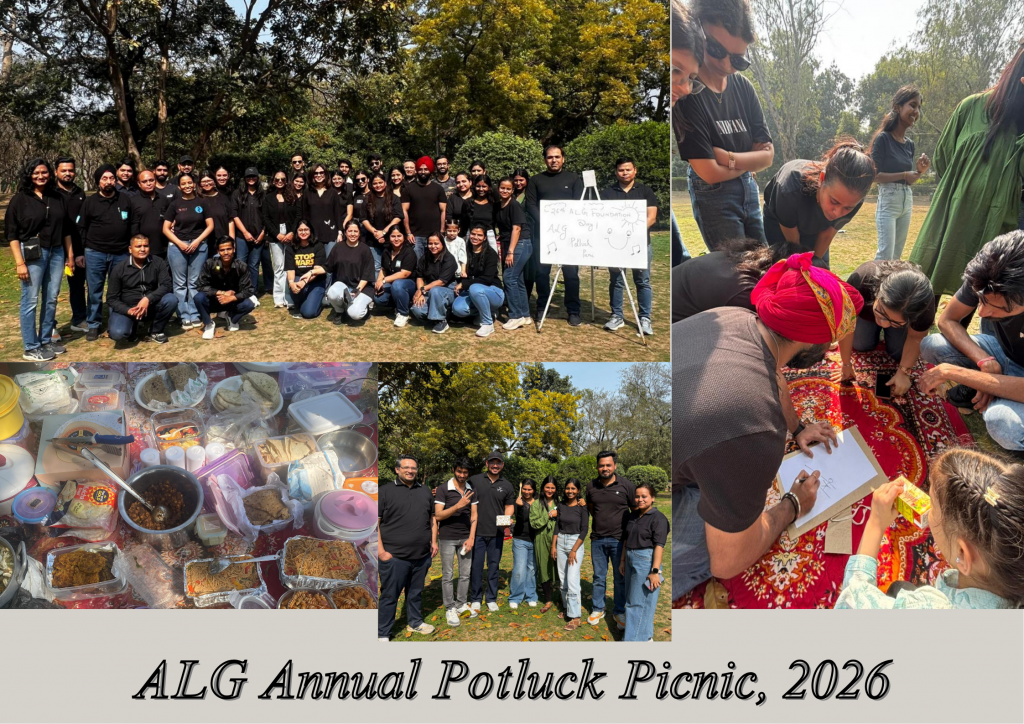
ALG Annual Potluck Picnic, 2026

ALG’s Potluck Picnic at Lodhi Garden was a wonderful celebration of ALG, its team camaraderie and growth over the years. Colleagues came together for fun games and a delicious spread of homemade dishes, making the day truly memorable.

We also welcomed our new team members as they stepped into their roles at the firm and surprised them during game time with our very competitive spirit.

ALG’s Annual Potluck is a day we all look forward to each year to get outdoors, play some games and feed the ‘foodie’ in each of us.

Looking forward to more success, milestones, and shared moments with the ALG team!

Legal Issues Seminar-General IP (LIS-GIP) On “Whether Failure To File Evidence Within The Prescribed Time Limit Leads To The Opposition Being Deemed Abandoned?”

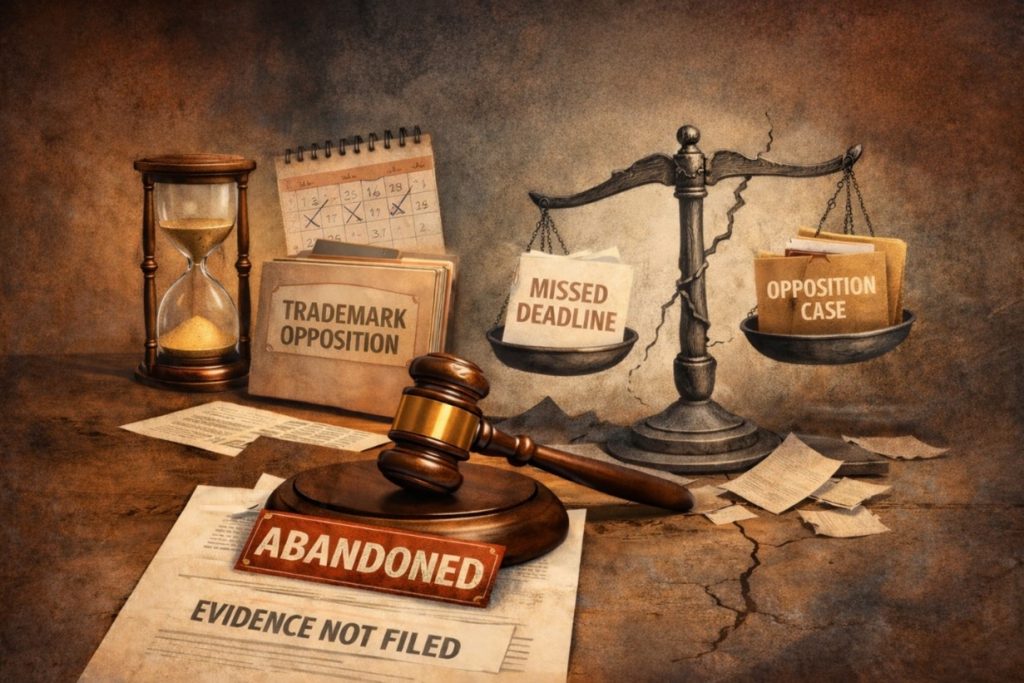
A Legal Issues Seminar – General IP (LIS-GIP) was conducted by Megha Hurkat, Associate, on the issue: “Whether failure to file evidence within the prescribed time limit leads to the opposition being deemed abandoned?” The seminar examined the procedural framework under Section 21(4) of the Trade Marks Act, 1999 and Rules 45 and 46 of the Trade Marks Rules, 2017 governing the filing of evidence in opposition proceedings. The discussion explored the interpretational issue that arises when evidence is not filed within the prescribed timeline and whether such failure automatically results in the opposition being deemed abandoned. While some decisions emphasize strict adherence to procedural timelines, others have taken the view that procedural lapses should not defeat substantive rights, and that non-filing of evidence should only restrict a party’s ability to rely on additional evidence rather than result in abandonment of the opposition.

The Presentation can be accessed here.

Practice Work Shop (PWS) On “Should Corporations Take Legal Action Against Protesters Who Use Their Brand Logos?”

During the last PWS session, Sonal Kumari, Associate, hosted a discussion on “Should corporations take legal action against protesters who use their brand logos?” The session explored the discussion between trademark enforcement and freedom of expression, particularly in instances of parody and criticism during protests, and considered whether use of trademarks of corporations contributes to legitimate public debate or warrants enforcement actions.

The session highlighted that corporations must balance the need to protect their trademarks against the reputational risks of over-enforcement, including potential public backlash and the Streisand effect. While enforcement is essential to prevent dilution and misuse of marks, an overly aggressive approach may be counterproductive. The session concluded that a calibrated approach rather than aggressive enforcement may prove to be an effective strategy for corporations navigating such scenarios.

  • Non Solicitation
  • Data Privacy & Protection
  • Conflict of Interest Policy
  • Data & Document Retention Practice
  • Firm Management Policy
  • Liability
  • Disclaimer
  • Privilege
  • Copyright
  • Billing Policy
  • Pro Bono